
Simple Budgeting Tips vs. Money Management Apps: Which Is Better For Your Young Family?
- Jan 8
- 5 min read
You're juggling mortgage payments, daycare costs, and grocery bills that seem to grow every week. The stress of managing your family's money keeps you up at night, and you're wondering if there's a better way to get control of your finances.
Here's the truth: Both simple budgeting methods and money management apps can work brilliantly for young families. The key is finding what you'll actually stick to long-term, not what looks perfect on paper.
Let's break down both approaches so you can choose the right path for your family's financial future.
The Simple Budgeting Approach: Pen, Paper, and Real Money
Simple budgeting gets back to basics. No screens, no notifications, just you and your money having an honest conversation.
The Pros of Going Simple
You see every dollar clearly. When you write down your budget by hand or use cash envelopes, there's something powerful about the physical act. You can't ignore that $200 grocery bill when you're counting out twenties.
Your family stays involved. Kids learn faster when they see real money moving around. Put up a whiteboard in your kitchen showing this month's goals, and watch how quickly your children start asking "Can we afford this?" instead of just demanding things.
No technology crashes. Your notebook doesn't need updates, won't crash during tax season, and works perfectly during power outages.
It forces slower, more thoughtful decisions. When you have to physically count cash or write down every expense, you naturally pause before spending. That pause often saves you money.

The Cons of Simple Budgeting
Time-consuming setup. Writing out every category and calculating totals takes longer than clicking a few buttons.
Easy to lose track. Forget to update your notebook for a week, and you're flying blind on your spending.
Math errors happen. When you're tired after a long day with the kids, adding up columns of numbers can lead to mistakes.
Limited insights. Simple methods show you what happened, but they don't easily reveal spending patterns over time.
The Money Management App Approach: Technology Does the Heavy Lifting
Apps promise to automate your financial life and give you instant insights into your spending habits.
The Pros of Using Apps
Automation saves time. Connect your accounts, and the app tracks every transaction automatically. No more hunting for receipts in your purse or calculating totals.
Real-time alerts keep you on track. Get a notification when you're close to your restaurant budget for the month, and you'll think twice about ordering takeout.
Pattern recognition shows the big picture. Apps can show you that you spend 30% more on groceries during school months or that your utility bills spike in summer.
Easy sharing with your spouse. Both of you can see the same information instantly, making money conversations more productive and less stressful.
The Cons of App-Based Budgeting
Technology dependence. When the app glitches or your phone dies, you lose access to your financial information.
Overwhelming features. Many apps try to do everything, creating complexity that defeats the purpose of simplifying your finances.
Security concerns. Linking all your accounts to one platform increases your risk if that platform gets hacked.
Subscription costs. The best features often require monthly fees, adding another expense to your budget.
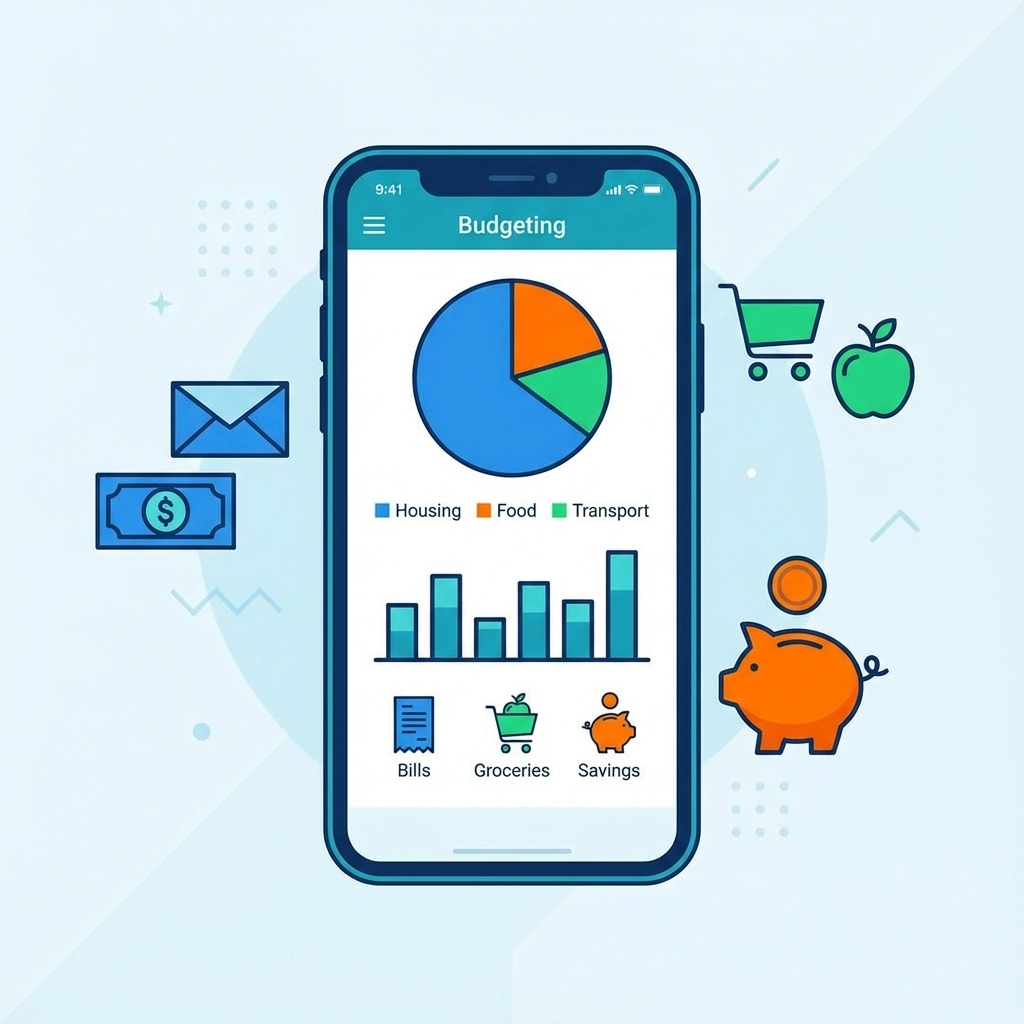
Quick Self-Test: Which Approach Fits Your Family?
Answer these five questions honestly:
Do you prefer writing things down or using your phone for most tasks?
How comfortable are you linking your bank accounts to third-party services?
Do you want your budgeting to happen automatically, or do you prefer hands-on control?
Are you more likely to stick with something simple but manual, or complex but automated?
How much time can you realistically spend on budgeting each week?
If you answered "writing down," "not comfortable," "hands-on control," "simple but manual," and "15-30 minutes weekly" → Simple budgeting is your best bet.
If you answered "phone," "very comfortable," "automatically," "complex but automated," and "5-10 minutes weekly" → Apps will serve you better.
Mixed answers? Keep reading about the hybrid approach.
The Hybrid Approach: Best of Both Worlds
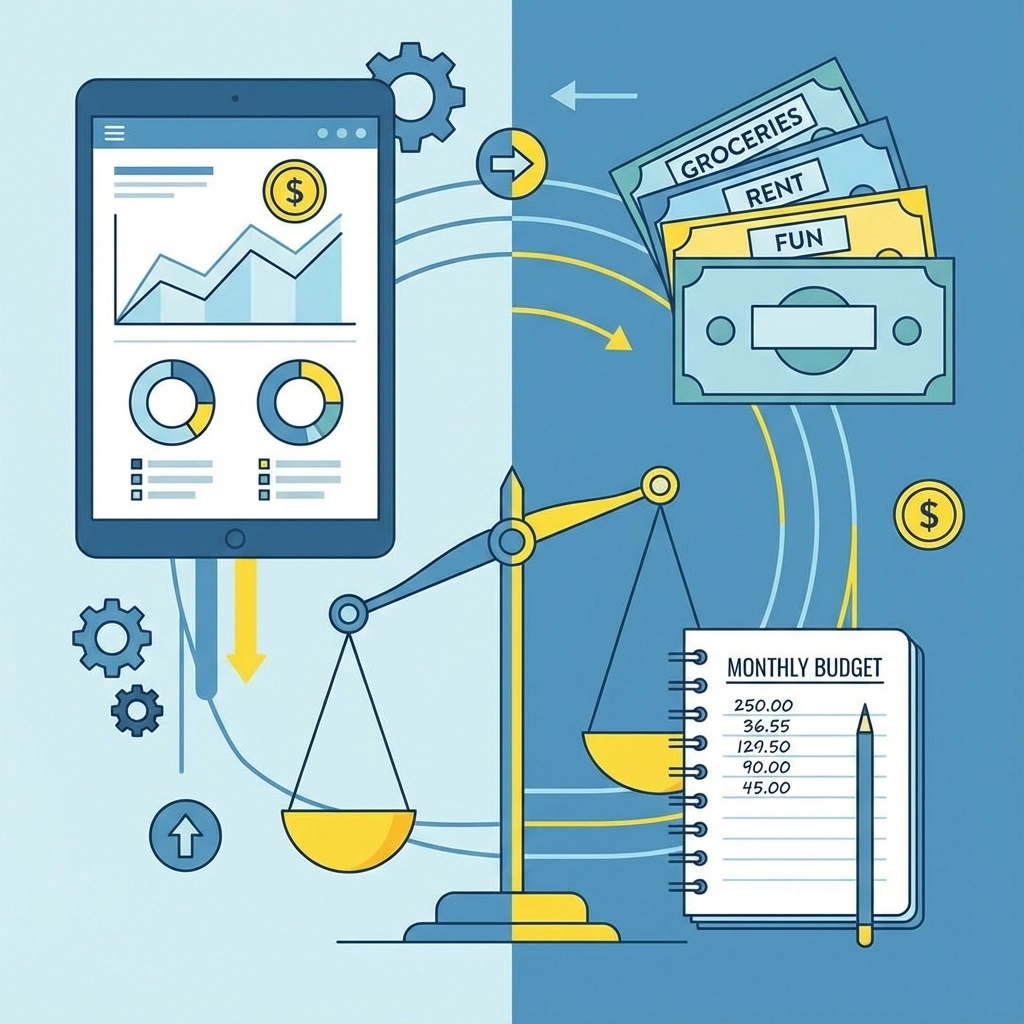
You don't have to choose just one method. Many successful families combine simple and digital approaches.
Use apps for tracking, cash for spending. Let technology monitor your overall financial picture while using cash envelopes for your most challenging budget categories like groceries and entertainment.
Weekly money dates with both tools. Spend 30 minutes every Sunday reviewing your app data, then planning the next week's cash allocations. This gives you automated insights plus hands-on control.
Teach kids with physical money, manage adults with apps. Show children budgeting concepts using real cash and jars, while you and your spouse coordinate through a shared app.
Common Mistakes That Sabotage Any Budgeting Method
Perfectionism Paralysis
You spend weeks researching the "perfect" budgeting system instead of just starting with something simple. The best budget is the one you actually use, not the one that looks pretty in theory.
All-or-Nothing Thinking
You blow your grocery budget by $50 and decide the whole system is broken. Every successful budget has flexibility built in. Adjust and keep going.
Forgetting About Irregular Expenses
Your budget works great until Christmas, summer vacation, or back-to-school shopping hits. Always include a category for irregular but predictable expenses.
Not Involving Your Spouse
One person does all the budgeting work while the other spends freely. Budget meetings aren't romantic, but financial teamwork strengthens your marriage and your bank account.
Ignoring the Emotional Side of Money
You focus on numbers while ignoring why you spend. Address the stress, fear, or habits driving your financial decisions, or you'll keep making the same mistakes.
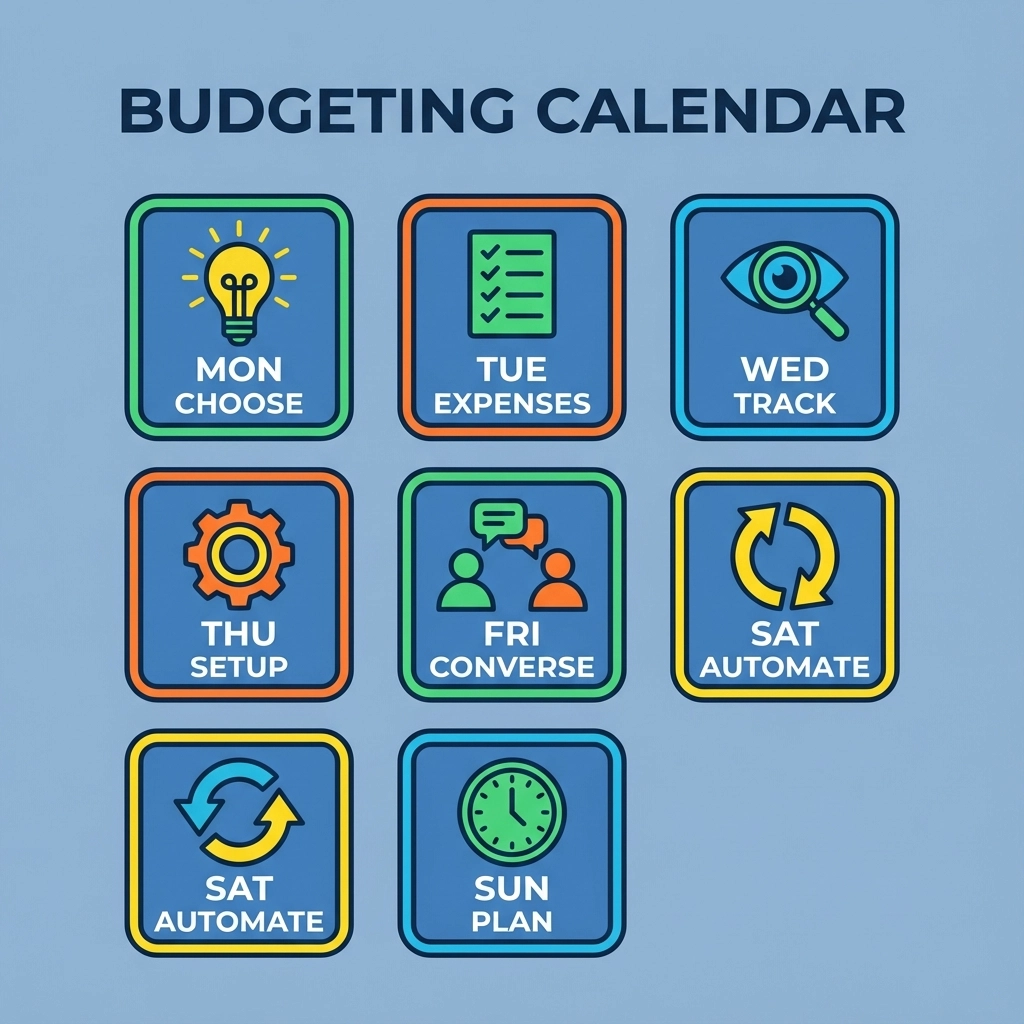
Your 7-Day Action Plan
Ready to take control? Here's what to do this week:
Day 1: Choose your approach based on the self-test above. Don't overthink it.
Day 2: List all your monthly income sources and fixed expenses (mortgage, insurance, minimum debt payments).
Day 3: Track everything you spend for one day without changing your behavior. Just observe.
Day 4: Create your first budget using either simple methods or by setting up your chosen app.
Day 5: Have a 30-minute money conversation with your spouse about your goals for the next three months.
Day 6: Set up one automatic system (either auto-pay for a bill or an automatic transfer to savings).
Day 7: Plan your weekly money check-in time. Put it on your calendar as a non-negotiable appointment.
The Bottom Line for Your Family
Your budgeting method matters less than your consistency. Whether you choose envelopes and notebooks or the latest financial app, success comes from regular attention to your money and honest communication with your spouse.
When you take control of your finances, you stop living paycheck to paycheck and start building the future your family deserves. You sleep better, stress less, and create opportunities for the things that truly matter.
The goal isn't perfection: it's progress. Start with whichever approach feels less overwhelming, and remember that you can always adjust as your family's needs change.
Disclaimer: This content is for educational purposes only and does not constitute financial advice. Every family's situation is unique, and you should consider your individual circumstances when making financial decisions.
Ready to Take Your Family's Financial Planning to the Next Level?
Managing your budget is just the first step. Let's work together to create a comprehensive financial plan that protects your family and builds lasting wealth.
Book a complimentary consultation:https://livemore.net/c/csanchezbaez Text Carlos: (512) 797-1442 Office: (813) 454-0463 Email:carlos.sanchez@sanchezfinancialblog.com LinkedIn:https://www.linkedin.com/in/carlos-sanchez-baez/ Website:https://livemore.net/c/csanchezbaez Blog:https://www.sanchezfinancialblog.com Life Insurance Calculator:https://forms.gle/WxMevcUJ5xK93pq26


Comments