
Simple Budgeting Tips That Actually Work: How Married Couples Can Stop Money Arguments in 30 Days
Money arguments are killing your marriage, and you both know it. Every month, the same fights erupt over spending, saving, and who's "better" with money. Your stress levels spike, your kids feel the tension, and you're both exhausted from the constant financial friction.
Here's the truth: 90% of couples argue about money, but it doesn't have to be this way. With the right approach, you can eliminate these arguments in just 30 days and actually start working together toward your family's financial goals.
Why Money Arguments Happen (It's Not What You Think)
The biggest enemy isn't your different spending styles or income levels. It's the lack of a shared financial plan that you both created together. When one person makes all the money decisions, resentment builds. When you avoid talking about money altogether, small issues become explosive fights.
Most couples fall into these destructive patterns: • One partner controls all the finances while the other feels powerless • You make assumptions about each other's priorities without actually discussing them • There's no regular system for tracking where your money goes • Major purchases happen without consultation • You use money to control or punish each other during disagreements
The good news? These patterns can be broken quickly with the right system.
Your 30-Day Money Argument Solution Plan
Week 1: Get on the Same Page (Days 1-7)
Day 1-2: Schedule Your First Money Meeting Pick a specific day and time each week for your "money date." Make it enjoyable: grab coffee, order takeout, or open a bottle of wine. This isn't about spreadsheets and lectures; it's about teamwork.
Day 3-4: Share Your Money Stories Talk openly about how money was handled in your childhood homes. What are your biggest financial fears? What are your dreams for your family's future? Understanding each other's money personalities prevents 80% of future arguments.

Day 5-7: Calculate Your Real Numbers List every source of income and every expense from the last three months. Don't judge: just gather facts. Use bank statements, credit card bills, and receipts. Most couples are shocked by what they discover, but knowledge is power.
Week 2: Choose Your System Together (Days 8-14)
Day 8-10: Pick Your Budgeting Method Choose an approach that works for both of your personalities:
• 50/30/20 Rule: 50% essentials, 30% wants, 20% savings and debt • Zero-Based Budget: Every dollar gets assigned a specific job • Envelope Method: Cash allocated to specific spending categories • Pay Yourself First: Savings come out automatically, then spend the rest
The key is selecting this together, not having one person impose their preferred system.
Day 11-14: Decide How to Split Expenses Agree on your approach before any bills come due: • Everything Combined: All income goes into shared accounts • Proportional Split: Each partner contributes based on their income percentage • 50/50 Split: Equal contributions regardless of income differences • Bill Division: Each person takes responsibility for specific expenses
Week 3: Implement Your Plan (Days 15-21)
Day 15-17: Set Up Your Accounts Open the accounts you need for your chosen system. Most successful couples use a "yours, mine, and ours" approach with both shared and individual accounts for personal spending.
Day 18-21: Start Tracking Together Use a simple app like Mint, YNAB, or even a shared Google Sheet. The person who's naturally more detail-oriented can handle daily tracking, but both partners review progress weekly.

Week 4: Build Sustainable Habits (Days 22-30)
Day 22-25: Create Spending Rules Agree on limits for purchases that require discussion. Many couples use $100-200 as their threshold: anything over this amount gets talked through first.
Day 26-30: Plan Your Next Three Months Look ahead at upcoming expenses: holidays, kids' activities, home repairs, vacations. When these are planned and budgeted together, they don't become surprise arguments.
The Communication Strategies That Actually Work
Make It About Goals, Not Control
Instead of "You spent too much on groceries," try "Let's figure out how to stay within our grocery goal so we can save for the kids' vacation fund." Frame everything around shared objectives, not personal attacks.
Use the 24-Hour Rule
For any purchase over your agreed threshold, wait 24 hours and discuss it with your spouse. This simple pause prevents impulse buying and ensures both partners have input on significant expenses.
Celebrate Your Wins
When you successfully stick to your budget for a month, celebrate together. Go out to dinner, buy something special, or plan a family activity. Positive reinforcement makes your new habits stick.
How to Handle Different Money Personalities
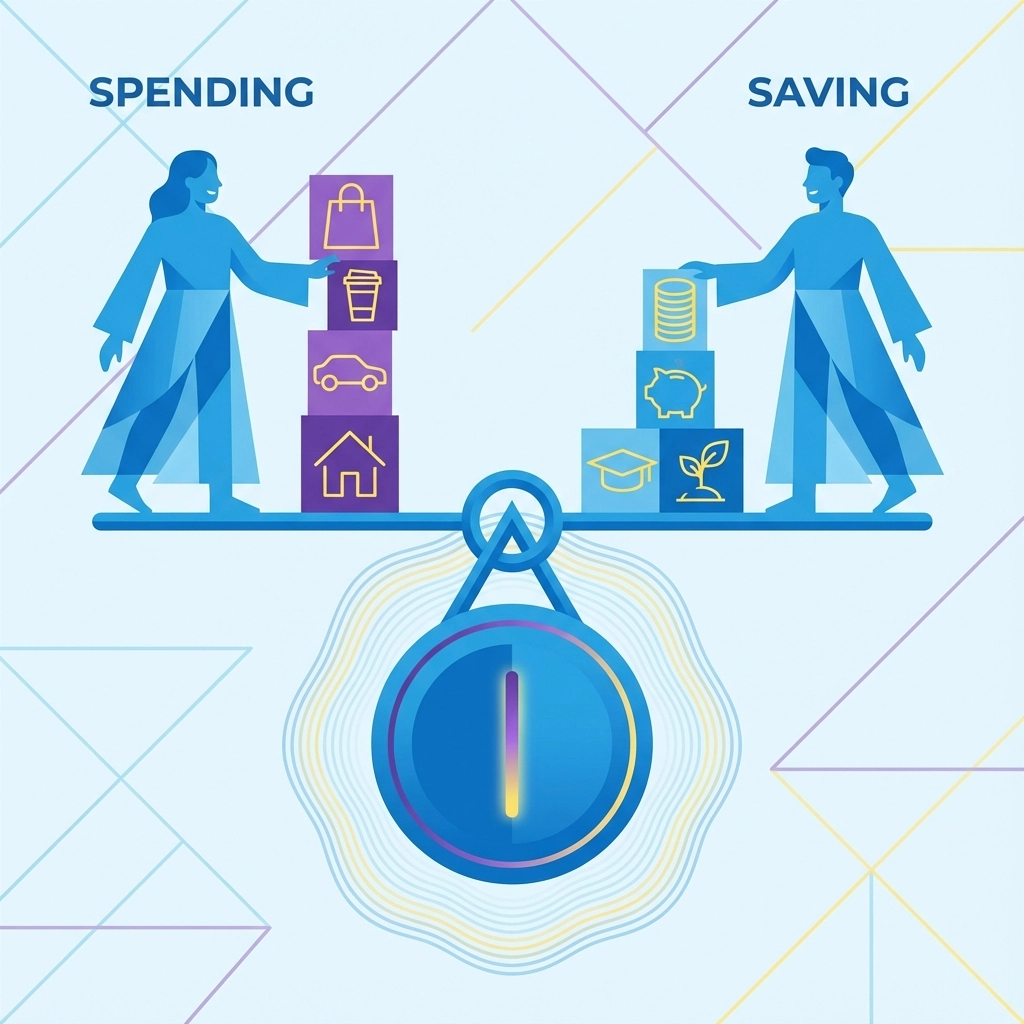
If One Partner is a Spender and One is a Saver: The spender brings joy and spontaneity; the saver provides security and planning. Create budget categories for both planned expenses and fun money. The saver shouldn't control every dollar, and the spender shouldn't ignore the budget entirely.
If You Have Very Different Incomes: The higher earner shouldn't make all the decisions, and the lower earner shouldn't feel guilty about contributing less financially. Focus on non-financial contributions and make sure both partners have equal input in money decisions.
If One Partner Handles All the Bills: The detail-oriented partner can manage day-to-day finances, but major decisions and monthly reviews happen together. The "non-financial" partner stays informed and involved without having to manage every transaction.
Your Emergency Plan for When Arguments Still Happen
Even with a solid budget, disagreements will occur. Here's how to handle them:
Pause the conversation when emotions run high
Schedule a specific time to revisit the issue (within 24 hours)
Focus on the specific issue, not past financial mistakes
Listen to understand, not to defend your position
Find a compromise that honors both perspectives
Remember: You're teammates working toward shared goals, not opponents fighting for control.
The Long-Term Benefits You'll See
When you follow this 30-day system, remarkable changes happen: • Your stress levels drop significantly as financial uncertainty disappears • Your kids feel the positive change in household atmosphere • You start making progress toward bigger goals like homeownership, college savings, and retirement • You develop confidence in your ability to handle financial challenges together • Your marriage becomes stronger as you tackle problems as a unified team
When you are excited about your future, you live more confidently today.
Ready to Transform Your Financial Relationship?
The biggest mistake couples make is trying to figure this out alone. You don't have to navigate budgeting, investing, and financial planning without expert guidance. As a financial services coach, I help busy families create simple systems that actually work for their lifestyle.
Take our quick Life Insurance Calculator to see if your family is properly protected:https://forms.gle/WxMevcUJ5xK93pq26
Ready to stop the money arguments and start building wealth together? Schedule a free 30-minute consultation where we'll create a personalized plan for your family's financial goals: https://livemore.net/c/csanchezbaez
Your marriage is too important to let money stress destroy it. Let's build a financial plan that brings you closer together, not drives you apart.


Comments