
Do You Really Need a Will in Your 30s? Here's the Truth
You're in your 30s. You've got a mortgage, maybe some kids running around, and a life that's finally starting to feel like... well, yours. The last thing on your mind is what happens when you're gone.
But here's the thing: if you care about protecting your family, a will isn't optional. It's one of the most important steps in financial planning for married couples, and it takes way less time than you think.
Let me walk you through why this matters, what a will actually does (and doesn't do), and how you can get started in under 60 minutes.
Why a Will Matters, Even If You Don't Feel "Wealthy"
Here's a myth I hear all the time: "I don't have enough money to need a will."
Wrong.
A will isn't just about dividing up a fortune. It's about making sure your stuff, your home, your car, your savings account, your grandmother's ring, goes exactly where you want it to go.
Without a will, the state decides. Not you. Not your spouse. The government.
That means a judge could determine who gets your house. Who handles your bank accounts. And most importantly, who raises your kids.

Only about 33% of adults in the U.S. have documented their end-of-life plans. That means two out of three families are leaving major decisions up to chance. Don't be one of them.
Guardianship: The #1 Reason Parents Need a Will
If you have kids, this is the part that should hit home.
Let's say the unthinkable happens and both you and your spouse pass away. Who takes care of your children?
Without a will, a court decides. And that court doesn't know your family. They don't know that your brother-in-law shares your values or that your best friend would be a better fit than your estranged uncle.
A will lets you name a guardian, someone you trust to raise your kids the way you would.
This alone is reason enough to get one done this week.
What Exactly Does a Will Do (and Not Do)?
Let's clear up some confusion.
A will DOES:
Specify who gets your assets (home, car, savings, personal items)
Name a guardian for your minor children
Appoint an executor to carry out your wishes
Help your family avoid confusion and conflict
A will DOES NOT:
Avoid probate (your estate may still go through this legal process)
Cover assets with named beneficiaries (like life insurance or retirement accounts)
Handle decisions if you're incapacitated but still alive
That last point is important. A will only kicks in after you pass. For decisions while you're alive but unable to speak for yourself, you need additional documents, more on that below.
Probate Basics: What Your Family Should Know
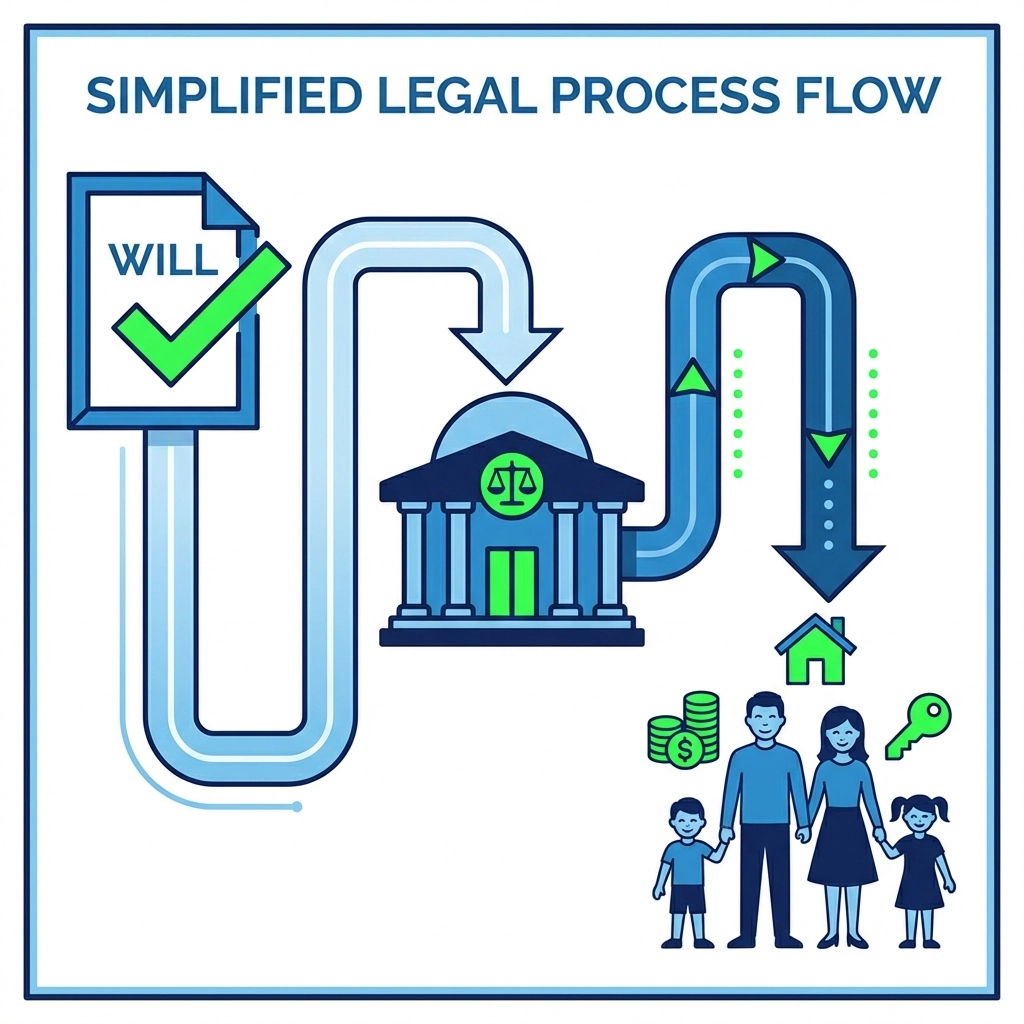
Probate is the legal process of validating your will and distributing your assets. It can take months, sometimes over a year, depending on your state.
Here's the deal: having a will doesn't skip probate, but it makes it way smoother.
Without a will, your family faces extra court hearings, higher legal fees, and a lot more stress. With a will, you've already laid out the roadmap. Your executor just follows your instructions.
If you're wondering how to protect your family financially, making their life easier during an already painful time is a huge part of it.
Don't Forget Beneficiary Designations
Here's something a lot of people miss: your will doesn't control everything.
Certain accounts, like your 401(k), IRA, and life insurance policies, pass directly to whoever you've named as a beneficiary. That designation overrides whatever your will says.
So if your ex is still listed as the beneficiary on your life insurance policy, guess who gets the payout? Not your current spouse. Not your kids. Your ex.
Take 10 minutes today to review your beneficiary designations. It's one of the simplest ways to make sure life insurance for families actually protects the right people.
Your Basic Estate Planning Checklist
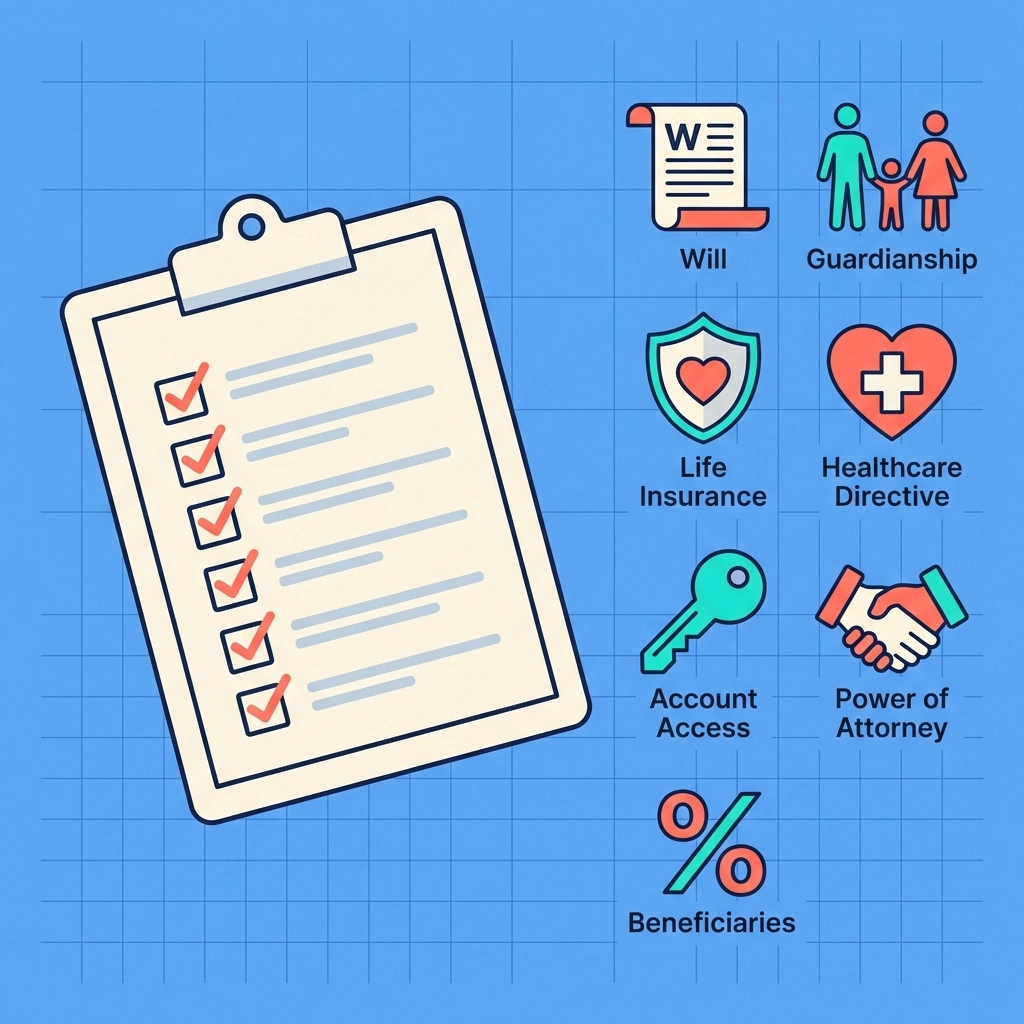
You don't need to hire an expensive attorney to get started. Here's what a solid foundation looks like:
Will – Covers asset distribution and guardianship
Guardian designation – Names who raises your kids
Beneficiary review – Updates on all insurance and retirement accounts
Power of Attorney – Names someone to handle your finances if you can't
Healthcare Directive (Living Will) – Outlines your medical wishes
Life insurance – Provides financial support for your family
Account access list – A simple document listing passwords and account info for your spouse or executor
You don't have to do all of this in one day. But getting started? That's non-negotiable.
Common Myths That Keep People Stuck
Myth #1: "I'm too young to need a will." Truth: Life is unpredictable. Your 30s are actually the perfect time because you likely have more to protect now than ever before.
Myth #2: "My spouse will get everything automatically." Truth: It depends on your state's laws. And if you have kids, things get even more complicated without a will.
Myth #3: "It's too expensive." Truth: Basic wills can cost anywhere from free (online templates) to a few hundred dollars with an attorney. Compare that to the thousands your family could spend in probate fees without one.
Myth #4: "I can do it later." Truth: You can. But will you? The best time to protect your family is right now.
Do This in 60 Minutes: Your Starter Steps
Ready to stop putting this off? Here's how to get moving today:
Make a list of your assets – Home, car, savings, investments, valuables. Keep it simple.
Decide on guardians – Talk to your spouse. Pick someone you both trust. Have a backup.
Review your beneficiaries – Log into your 401(k), IRA, and life insurance accounts. Update as needed.
Draft a basic will – Use an online service or schedule a quick call with an estate attorney.
Store it safely – Keep the original in a fireproof safe or with your attorney. Tell your executor where to find it.
That's it. One hour. Peace of mind for years.
FAQs
Do I need a lawyer to create a will? Not necessarily. Online tools work for simple situations. But if you have a blended family, business ownership, or complex assets, an attorney is worth the investment.
How often should I update my will? Review it every 2-3 years or after major life events, marriage, divorce, new baby, home purchase.
What if my spouse and I disagree on guardians? Have the conversation now. It's better to work through it together than leave it to a court.
Is a will the same as a trust? No. A trust can help you avoid probate and offers more control, but it's more complex. Start with a will, then build from there.
Disclaimer
This blog post is for educational purposes only and is not legal advice. Every family's situation is different. Please consult with a qualified attorney to discuss your specific needs.
Ready to Protect Your Family?
When you're excited about your future, you live more confidently today. Let's make sure your family is covered: no matter what.
Book a complimentary consultation:https://livemore.net/c/csanchezbaez
📱 Text Carlos: (512) 797-1442 📞 Office: (813) 454-0463 ✉️ Email:carlo.sanchez@sanchezfinancialblog.com 💼 LinkedIn:Connect with Carlos 🌐 Website:livemore.net/c/csanchezbaez 📝 Blog:sanchezfinancialblog.com
🧮 Try the Life Insurance Calculator:https://forms.gle/WxMevcUJ5xK93pq26


Comments